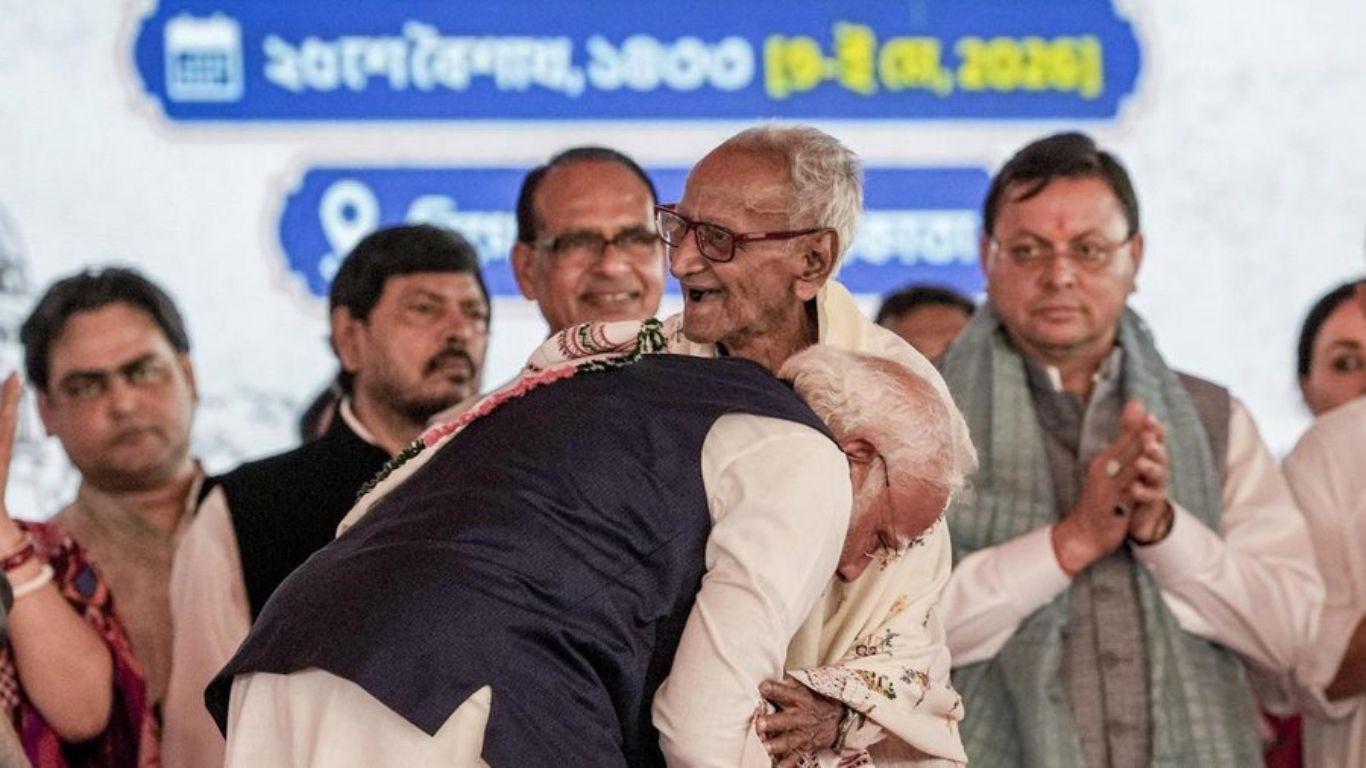
Indian politics is filled with dramatic speeches, heated campaigns, and intense election battles, but sometimes a simple human gesture becomes more memorable than all the political slogans combined. That is exactly what happened during the swearing-in ceremony of Suvendu Adhikari in West Bengal when Prime Minister Narendra Modi bent down to seek blessings from senior BJP worker Makhanlal Sarkar. The moment instantly grabbed public attention and quickly spread across television channels and social media platforms.
People from different political backgrounds reacted to the interaction in different ways, but one thing was clear — the image carried emotional weight. For many supporters, it reflected humility and respect toward an elderly party worker who spent decades working quietly for the organization. Others saw it as a symbolic reminder that political success is built on the dedication of ordinary workers who rarely receive national recognition.
The ceremony itself was already politically important because it represented a major turning point in West Bengal’s political landscape. Yet the emotional interaction between Modi and Sarkar transformed the event into something more personal and culturally relatable. In a country where respecting elders is deeply connected with tradition and family values, the moment struck a chord with millions of people.
Why the Event Became a National Talking Point
Political Importance of the Ceremony
The oath-taking ceremony of Suvendu Adhikari was already expected to attract nationwide attention because of its political significance in West Bengal. The state has long been known for its intense political culture, where elections are often emotional, ideological, and deeply competitive. Any major leadership change in Bengal naturally becomes part of the national political conversation.
For the BJP, the ceremony represented years of political effort and organizational expansion in a state where the party once had limited influence. Party workers and supporters viewed the occasion as proof that consistent groundwork and strategic campaigning had finally produced visible results. Because of this, the event carried emotional significance for thousands of BJP supporters across the country.
Still, it was not the speeches or official formalities that became the biggest talking point. The image that captured public imagination was Narendra Modi respectfully greeting Makhanlal Sarkar. Political ceremonies often follow predictable patterns, but genuine emotional moments can suddenly shift attention and dominate headlines. That is exactly what happened here.
The Emotional Visual That Went Viral
As cameras rolled during the ceremony, Prime Minister Modi walked toward Makhanlal Sarkar, bowed down, and touched his feet before greeting him warmly. The reaction from the crowd was immediate. Within a short time, clips of the interaction began spreading rapidly online.
People connected with the moment because it reflected a cultural practice familiar in many Indian households. Seeking blessings from elders is considered a sign of respect, gratitude, and humility. Watching the country’s Prime Minister publicly follow that tradition made the scene emotionally powerful for many viewers.
The visual also worked because it felt natural and unscripted. In today’s political environment, people are often skeptical about staged public appearances. Emotional authenticity, whether real or perceived, plays a major role in shaping public reactions. The simplicity of the gesture made it memorable.
Makhanlal Sarkar’s Journey in Politics
Early Years and Ideological Commitment
Makhanlal Sarkar may not be widely known outside political circles, but among long-time BJP supporters in West Bengal, he is respected as a veteran worker with decades of dedication to the party’s ideological movement. His political journey reportedly began during the era of the Bharatiya Jana Sangh, which later evolved into the BJP.
Workers from that generation operated in a very different political environment compared to today. There were no social media campaigns, no viral videos, and no instant digital outreach. Political organization depended heavily on face-to-face communication, local meetings, and community engagement. Workers often traveled long distances, organized small gatherings, and built support slowly over many years.
For many of them, politics was less about public visibility and more about commitment to an ideology. They continued their work even during periods when electoral success seemed distant. That history is one reason why the gesture from Modi during the ceremony carried such emotional meaning for party supporters.
Contribution to BJP’s Growth in Bengal
The BJP’s rise in West Bengal did not happen overnight. It took years of organizational work, local outreach, and consistent efforts by workers at the grassroots level. Veteran members like Makhanlal Sarkar were part of that long process.
Political movements are often compared to buildings. While leaders may become the visible face of the structure, the real strength lies in the foundation hidden underneath. Grassroots workers serve as that foundation. They maintain local connections, motivate volunteers, and help parties survive difficult political periods.
By publicly acknowledging Sarkar during such an important ceremony, Modi highlighted the role played by ordinary workers who helped strengthen the party long before major victories arrived. The gesture therefore carried both emotional and political meaning.
Narendra Modi’s Gesture and Public Reaction
Cultural Meaning Behind Touching Feet
In Indian society, touching the feet of elders is a deeply respected tradition. The act symbolizes humility, respect, and the desire to receive blessings from someone older and wiser. It is commonly practiced within families during festivals, weddings, and other important occasions.
When Modi touched Makhanlal Sarkar’s feet, many viewers saw the gesture through that cultural lens rather than only as a political act. The scene reminded people of traditions they experience in their own personal lives. That familiarity helped create an emotional connection between the audience and the event.
Public figures often appear distant because of their status and authority. Gestures rooted in cultural traditions can make them seem more relatable and human. In this case, the moment felt less like a formal political interaction and more like a respectful exchange between two individuals from different generations.
Reactions From Supporters and Critics
Supporters of the BJP praised Modi for publicly honoring a veteran worker who had spent years contributing to the party’s growth. Many described the gesture as an example of humility and respect for organizational loyalty.
Critics, however, viewed the moment differently. Some argued that political symbolism is carefully designed to create emotional impact and strengthen public perception. Others believed that such visuals should not overshadow discussions around governance and policy issues.
Despite the differing opinions, almost everyone agreed that the moment was powerful from a communication standpoint. In modern politics, visuals often leave stronger impressions than speeches, and this interaction became one of the most discussed moments from the ceremony.
Suvendu Adhikari and Bengal’s Political Shift
His Rise in State Politics
Suvendu Adhikari’s political journey has attracted attention because of the speed and scale of his rise in West Bengal politics. Known for his strong grassroots presence, he gradually emerged as one of the BJP’s key leaders in the state.
His ability to connect with local communities helped him build influence across different voter groups. Political observers often describe him as a leader who understands Bengal’s regional dynamics while also aligning effectively with the BJP’s broader political messaging.
The oath ceremony therefore symbolized not only his personal success but also a larger political transformation within the state. Supporters viewed it as evidence that the BJP had successfully expanded its presence in a politically challenging environment.
BJP’s Expanding Influence in Bengal
For years, Bengal politics was dominated by regional and left-oriented political forces. The BJP remained a smaller player for a long time before gradually increasing its support base. This expansion required consistent campaigning, organizational development, and strategic leadership.
The party’s growth in Bengal reflects broader political changes taking place across the country. Voters are increasingly willing to shift loyalties when they feel dissatisfied with existing leadership or attracted to new political narratives.
The ceremony highlighted how dramatically Bengal’s political landscape has evolved over time. The presence of senior leaders, enthusiastic supporters, and long-time party workers created an atmosphere that felt historic for many BJP supporters.
Importance of Grassroots Workers in Politics
The Foundation Behind Political Success
Political victories are often associated with famous leaders, but every successful movement depends heavily on workers at the local level. Grassroots workers connect directly with communities, organize campaigns, and maintain party networks in towns and villages.
These workers rarely receive public recognition despite contributing enormous amounts of time and effort. Many continue working for years without holding major political positions or gaining media attention. Their commitment is usually driven by ideology, loyalty, and belief in the organization.
The interaction between Modi and Makhanlal Sarkar brought attention to this often invisible side of politics. It reminded people that large political movements are built through years of collective effort rather than individual leadership alone.
Why Veteran Workers Matter
Veteran political workers also serve as living links to a party’s history and ideology. They carry institutional memory, organizational experience, and emotional connection to earlier generations of leadership.
Honoring such individuals publicly can strengthen morale within political organizations. It sends a message that dedication and loyalty are respected, regardless of whether someone holds high office.
For many BJP supporters, Modi’s gesture represented acknowledgment of decades of sacrifice by workers who remained committed even during difficult political periods in Bengal.
Social Media’s Role in Amplifying Political Moments
Viral Political Content in Modern India
Social media has transformed the way political moments spread and influence public opinion. A short video clip can now reach millions of people within minutes, shaping conversations far beyond the location where the event actually occurred.
The interaction between Modi and Sarkar became highly shareable because it was emotionally simple and visually strong. People did not need lengthy explanations to understand the meaning behind the gesture.
Television channels and online platforms repeatedly replayed the footage, helping the moment gain even more visibility. In many ways, social media turned a brief interaction into a nationwide political discussion.
Emotional Storytelling and Public Memory
People tend to remember emotions more clearly than policy details. Emotional visuals create stronger memories because they connect with personal experiences and cultural values.
The Modi-Sarkar interaction succeeded because it combined politics with universally understood emotions like respect and gratitude. Whether people supported the BJP or not, the moment felt emotionally understandable.
That is why symbolic moments continue to play such an important role in modern political communication.
Symbolism in Indian Political Culture
Gestures That Connect With Voters
Indian politics has always involved symbolism. Leaders often use gestures, public interactions, and cultural references to connect emotionally with voters. These moments can become powerful because they reflect traditions and values familiar to ordinary people.
The interaction during the ceremony worked for exactly that reason. It was simple, visual, and emotionally relatable. It connected political leadership with everyday cultural practices.
The Blend of Emotion and Strategy
Political symbolism is rarely accidental. Leaders understand that emotional moments can strengthen public image and shape narratives quickly. At the same time, not every emotional interaction is purely strategic. Sometimes the power of a moment comes from the fact that it feels authentic.
The Modi-Sarkar interaction became memorable because it existed somewhere between cultural tradition, personal respect, and political symbolism. That combination gave the moment lasting impact.
Conclusion
The swearing-in ceremony of Suvendu Adhikari became nationally important for political reasons, but the interaction between Narendra Modi and Makhanlal Sarkar gave the event a deeper emotional meaning. By seeking blessings from the elderly BJP worker, Modi highlighted values that resonate strongly within Indian society — respect for elders, acknowledgment of dedication, and appreciation for long-term commitment.
For supporters, the gesture symbolized gratitude toward generations of grassroots workers who helped build the party through years of struggle. For political observers, it demonstrated how emotional symbolism continues to shape modern political communication.
Long after the speeches and formal proceedings are forgotten, the image of Modi bowing before Makhanlal Sarkar is likely to remain one of the defining memories from the ceremony.
FAQs
1. Who is Makhanlal Sarkar?
Makhanlal Sarkar is a senior BJP worker from West Bengal known for his long association with the party’s ideological and organizational activities.
2. Why did PM Modi touch his feet?
Touching the feet of elders is a traditional Indian practice that symbolizes respect and seeking blessings.
3. Why was the ceremony politically significant?
The ceremony represented an important political moment in West Bengal and highlighted the BJP’s growing influence in the state.
4. Why did the video become viral?
The interaction was emotional, culturally relatable, and visually powerful, making it widely shareable on social media.
5. What message did the gesture send to party workers?
The moment highlighted the importance of grassroots workers and acknowledged their long-term contribution to political organizations.