
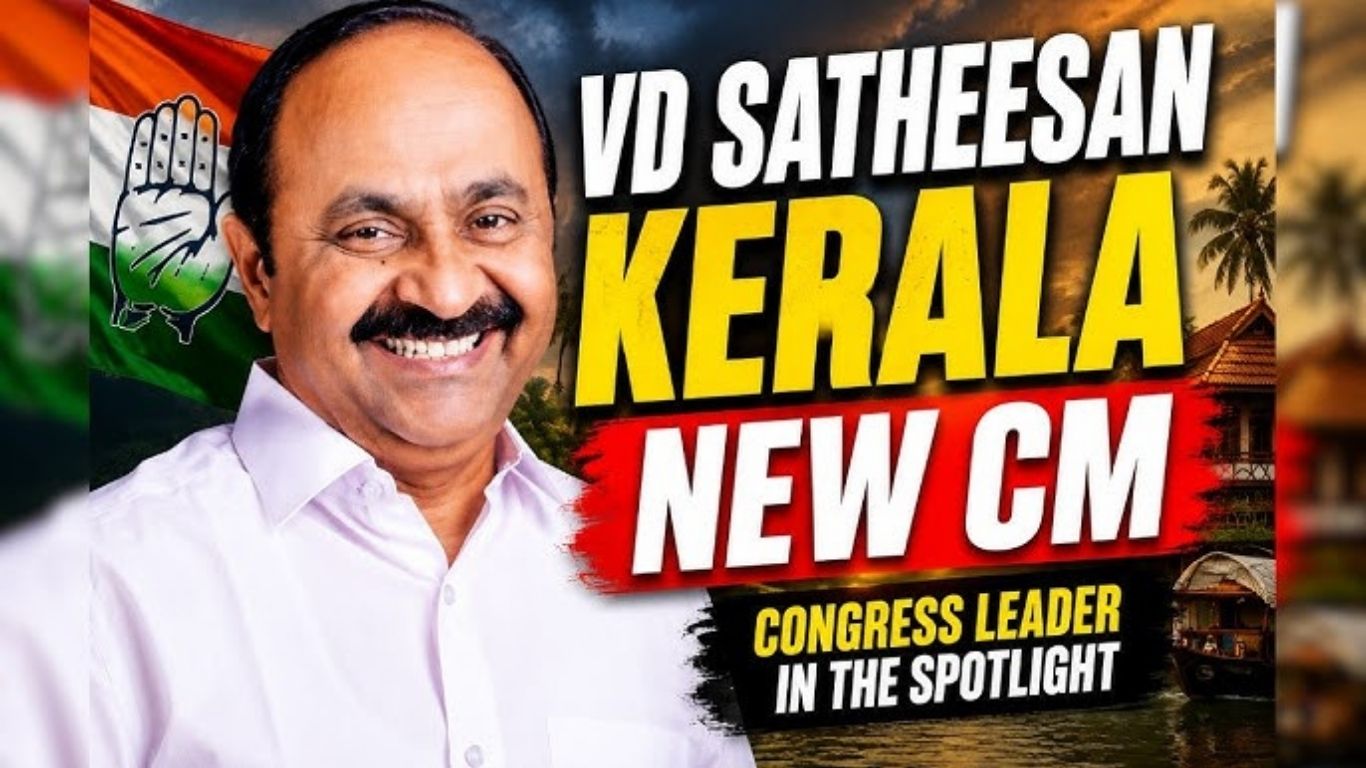
Even after Satheesan emerged as the emotional favourite among party workers, K. C. Venugopal was never treated like a symbolic candidate. His name stayed in serious discussion until the very end because his influence inside the Congress structure is enormous.
In national politics, Venugopal is considered one of the party’s key organizational managers. He has spent years handling strategy, coordination, and communication at the highest level of Congress leadership. That kind of political capital matters, especially in a party where internal balance often decides leadership outcomes as much as public popularity does.
Several newly elected MLAs reportedly viewed him as a dependable administrator who could maintain smooth coordination between Kerala and the national leadership. For many within the party, his experience in Delhi represented stability. Congress governments in the past have sometimes struggled because state leaders and the central organization pulled in different directions. Venugopal’s supporters argued that he could avoid those problems because of his standing within the party hierarchy.
There was also another calculation behind his candidacy. Congress has historically depended on compromise formulas to manage factional tensions. Leaders who possess strong organizational authority are often seen as safer options during moments of transition. Some party insiders believed Venugopal could balance competing camps more effectively than a more publicly driven leader.
Yet this election created unusual circumstances. The Congress comeback in Kerala was deeply tied to perception and narrative. Satheesan had spent years building himself into the most recognizable anti-LDF figure in the state. That made the contest unequal in one important way: Venugopal may have had stronger organizational reach, but Satheesan owned the public imagination during the campaign.
And modern politics rarely ignores that factor for long.

How Satheesan Became The Face Of The Opposition
Political leadership is often built gradually, almost invisibly, before one election suddenly makes everything look inevitable. Satheesan’s rise followed that pattern.
For years, he was respected inside Kerala politics but not necessarily viewed as the undisputed future of the Congress in the state. Senior leaders with larger factional networks often dominated internal conversations. Satheesan, meanwhile, focused on building credibility through legislative debates, public campaigning, and issue-based attacks against the government.
His real turning point came after the Congress defeat in the previous Assembly election. At a time when many supporters felt demoralised and directionless, Satheesan adopted a far more aggressive opposition strategy than the party had displayed in years.
He attacked the ruling Left government relentlessly on corruption allegations, financial controversies, administrative failures, and law-and-order issues. Television debates increasingly featured his speeches. Clips from Assembly confrontations circulated widely on social media platforms. Gradually, even people outside the Congress support base began associating him with the state’s anti-government political energy.
That transformation was crucial because Kerala’s electorate pays close attention to political communication. The state has one of the country’s most politically aware voter bases, and opposition leaders are expected to remain constantly active in public debate. Satheesan adapted naturally to that environment.
By the time the election campaign reached its final phase, he no longer looked like just another senior Congress leader. He looked like the central challenger to the Left government.
Once that image became firmly established, changing course after victory would have appeared politically unnatural.
The Coalition Factor Congress Couldn’t Ignore
Kerala politics does not operate through Congress alone. Alliances matter enormously, and the United Democratic Front functions through careful coordination between multiple influential partners.
That reality reportedly strengthened Satheesan’s position significantly.
The Indian Union Muslim League, one of the UDF’s most important allies, was widely seen as more comfortable with Satheesan’s leadership. In coalition politics, those signals carry major weight. A chief ministerial decision is never only about one party’s internal preference. It also reflects the leadership equation that coalition partners believe can maintain stability over five years.
Congress leaders understood the risks of creating dissatisfaction immediately after returning to power. Coalition governments require trust and constant communication. Selecting a leader who already enjoyed broader acceptability across alliance partners reduced the possibility of early friction.
This was particularly important because the UDF victory created huge expectations. Any visible disagreement within the alliance immediately after the election would have damaged the momentum generated by the result.
Satheesan’s image as a consensus figure inside the alliance therefore became one of his strongest political advantages.
Why Optics Played A Bigger Role Than Usual
Indian politics has entered an era where optics can become almost as important as organisational arithmetic. Congress recognised that reality during the Kerala leadership debate.
To many ordinary voters, Satheesan already looked like the incoming chief minister before the official announcement happened. His visibility during the campaign had created that assumption naturally. News channels repeatedly projected him as the opposition’s primary face, and Congress workers amplified that perception aggressively across social media.
If the party had suddenly elevated someone else after the victory, it would have raised uncomfortable questions. Why campaign around one leader but hand power to another? Why allow public expectations to build around Satheesan only to reverse direction at the final moment?
Those questions may not have destroyed the government immediately, but they would have weakened the emotional clarity of the Congress comeback story.
Political parties depend heavily on momentum after elections. Supporters want to feel that victories produce logical outcomes. Satheesan’s appointment protected that continuity.
Congress effectively decided that the safest political choice was also the most publicly believable one.
The Risks Congress Saw In Choosing Venugopal
The hesitation around Venugopal was not about lack of competence. It was about political consequences.
One concern reportedly involved perception. Venugopal’s long association with national-level Congress leadership made him appear more connected to Delhi’s power structure than Kerala’s day-to-day political battleground. In a state like Kerala, where voters closely observe authenticity and local engagement, that contrast mattered.
Satheesan had spent years physically and politically present in the state’s major controversies. Venugopal, despite his stature, was often viewed through a national political lens.
Congress leaders likely worried that opponents would weaponize that difference immediately. The Left could easily have framed the decision as another example of “Delhi high-command culture,” accusing Congress of ignoring local political realities in favour of organisational loyalty.
That criticism has damaged Congress in multiple states over the years.
There were also practical concerns involving parliamentary responsibilities and possible by-election complications if Venugopal shifted fully into state leadership. In a tightly managed political environment, parties often prefer transitions that create minimal instability.
Satheesan offered exactly that — continuity, familiarity, and immediate public acceptance.
What Satheesan’s Rise Says About Congress Today
The Kerala decision may reveal a larger shift happening slowly inside the Congress party.
For years, the organisation has been criticised for relying too heavily on centralised leadership structures while failing to empower strong regional faces. In several states, that approach eventually produced frustration, rebellion, or electoral decline.
Satheesan’s selection suggests Congress may finally be recognising a political truth that regional parties understood long ago: voters connect more deeply with leaders who visibly own local struggles.
That does not mean internal hierarchy has disappeared from Congress politics. It still matters enormously. But Kerala showed that organisational influence alone may no longer guarantee leadership elevation when another leader has already captured public imagination.
In many ways, Satheesan’s rise reflects a broader change in Indian politics itself. Visibility, communication skills, and sustained grassroots engagement now shape leadership battles far more than closed-room negotiations alone.
The leaders who dominate public conversation increasingly become the leaders parties cannot afford to ignore.
The Challenges Waiting For Satheesan
Winning the chief ministerial race inside the party may ultimately prove easier than governing Kerala itself.
The expectations surrounding Satheesan are massive because the Congress victory carried emotional intensity after years in opposition. Supporters are not simply expecting administrative continuity. They are expecting visible change.
Kerala faces serious economic pressures, rising concerns around employment opportunities, financial management issues, and debates over development priorities. Campaign speeches and opposition attacks will now be measured against governance outcomes.
That transition can be politically dangerous.
Leaders who excel in opposition politics sometimes struggle once they become responsible for administration. Opposition rewards aggression and criticism. Governance demands patience, compromise, and delivery. Satheesan will need to adjust quickly to that shift.
He also faces the familiar Congress challenge of managing internal factions. Leadership contests rarely end emotional rivalries completely. Even after the final announcement, competing camps continue watching power distribution closely — cabinet positions, organisational appointments, policy influence, and alliance management all become sensitive issues.
How Satheesan handles those internal equations may shape the stability of the government as much as opposition attacks do.
Congress Chose The Man The Political Moment Demanded
In the end, the Kerala leadership decision came down to one central reality: Satheesan had already become inseparable from the Congress comeback story.
KC Venugopal possessed organisational influence, national stature, and strong support within important sections of the party. Under different circumstances, those advantages may well have carried the day.
But this election created a different political atmosphere.
Satheesan had spent years publicly confronting the Left government, rebuilding opposition morale, energising Congress workers, and positioning himself as the face of resistance. By the time the UDF returned to power, many supporters viewed the victory as politically connected to his leadership.
Congress ultimately understood that ignoring such a powerful public perception would create more problems than it solved.
So the party chose the leader who already looked like the natural claimant to the mandate.
Not because internal politics disappeared.
Not because organisational calculations stopped mattering.
But because sometimes a political moment becomes too clear to resist.



Leave a Reply